
Walter Onnoghen: Power, Justice and the Consequences of Our Decisions
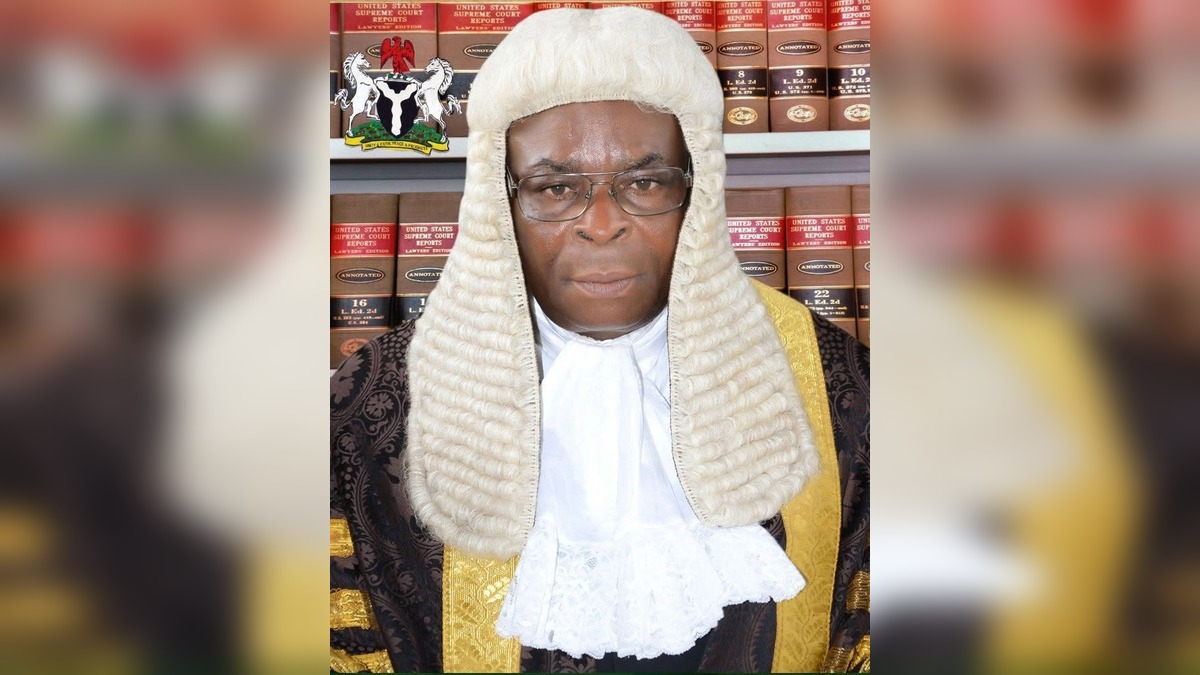
The story of former Chief Justice of Nigeria, Justice Walter Onnoghen, offers an opportunity to reflect on political power, judicial independence and the importance of accountability in public office.
In January 2019, shortly before Nigeria’s general election, President Muhammadu Buhari suspended Onnoghen following an interim order issued by the Code of Conduct Tribunal. Justice Ibrahim Tanko Muhammad was sworn in as acting Chief Justice.
The suspension and subsequent proceedings generated significant controversy about the separation of powers and the constitutional process for disciplining a judicial officer.
Onnoghen was convicted by the tribunal in April 2019 over false asset declaration charges, and the tribunal ordered his removal from office.
The 2024 Court of Appeal decision:
The case took a significant turn on November 4, 2024, when the Court of Appeal discharged and acquitted Onnoghen and ordered the return of his forfeited bank accounts.
The decision followed a settlement between Onnoghen and the Federal Government. The proceedings raised renewed questions about the proper constitutional role of the National Judicial Council in matters involving judicial discipline.
The outcome remains an important chapter in discussions about the independence of Nigeria’s judiciary and the safeguards needed to prevent the misuse of public authority.
The subsequent legal challenges:
Abubakar Malami, who served as Attorney General of the Federation under Buhari, subsequently faced legal proceedings under the Tinubu administration.
In July 2026, a Federal High Court ordered the final forfeiture of 48 properties linked to Malami following proceedings brought by the Economic and Financial Crimes Commission. He has also faced criminal charges involving allegations of money laundering and conspiracy. These proceedings must be distinguished from a criminal conviction.
Danladi Umar, the former chairman of the Code of Conduct Tribunal who presided over Onnoghen’s trial, also faced a separate legal case. In July 2026, he was arraigned on allegations of abuse of office and granted bail of ₦100 million. He pleaded not guilty, and the allegations remain subject to judicial determination.
Justice Ibrahim Tanko Muhammad resigned as Chief Justice in June 2022, citing ill health, following reported concerns from Supreme Court justices about their working conditions and welfare. He died in Saudi Arabia on December 16, 2025, aged 71.
Former President Muhammadu Buhari died in London on July 13, 2025.
These events are part of Nigeria’s public record. However, they do not establish that subsequent legal difficulties or personal circumstances were punishment for anyone’s earlier decisions.
Lesson: Power is temporary, but accountability matters:
The lesson is not that everyone involved in a controversial decision will inevitably suffer the same fate they helped bring upon someone else. History does not work according to such a predictable formula.
Rather, this story reminds us that public office comes with responsibility. Decisions made by people in authority can affect reputations, careers, institutions and public confidence for years to come.
Judicial independence should be protected. Constitutional procedures should be respected. Allegations should be tested through due process, and public officials should be held accountable under the same law that applies to everyone else.
Political loyalty must never become more important than justice, and the power to influence another person’s future should never be treated as permission to disregard their rights.
History remembers the positions people occupied, but it also remembers the decisions they made while holding them.
As the saying goes, a person who sows rice should not expect to harvest beans.
We cannot predict every consequence of our actions, but we can choose to act with fairness, integrity and respect for the law.
Never allow the power you possess today to make you forget the humanity of the people whose lives your decisions affect.
Reactions (0)
👍 Like 0
😂 Funny 0
😡 Angry 0
😲 Wow 0
Comments
Login to comment.